This is Part 3 of 3
I split it up into 3 parts, because of all the animated gifs. Didn’t want to have one big page with 10 megabytes of gifs.
Part 1 is here. It has my introduction, and my F Tier, D Tier, C Tier.
Part 2 is here. It has my B Tier and A Tier.
You’re looking at part 3! It has my S Tier and my SSS Tier.
S TIER (Masterpieces, these are everything I want in a video game)
18 – Seaside Drive
[My Description: An autoscroll shmup where you’re a car, driving rightward, shooting at enemies above you. Hitting the brakes (moving you leftward on the screen) restores your gun’s power level.]
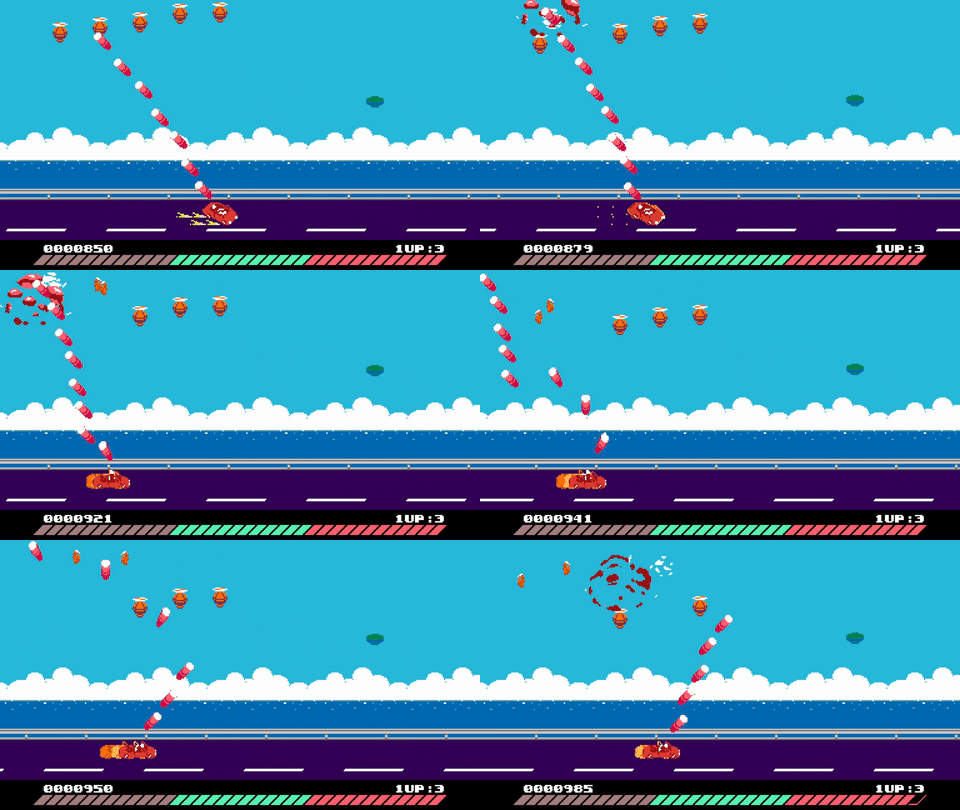
And now, probably the BEST looking game in the package. This looks like concept art for a game, that a dev team would quickly give up on, for being too hard to make. But these guys actually did it!
And the music too!! Wow, definitely a contender for best music in UFO 50. This whole game is an audio/visual treat.
“Level design” in a shmup always sounded very difficult to me. (“Uhhhh 5 of these enemies come, and uhhh, then, 3 of these come, and uhhhh…”). But Seaside Drive shows us how it’s done!! These levels are impressively creative, memorable, fun, and even silly. I love the parts where you dodge bouncing stuff. And the parts with waves crashing onto the road. And I love how the time of day changes, from stage to stage, so pretty!! (Which means, we get to have a spooky nighttime level!) The bonus stages are very clever too.
In terms of gameplay innovation, eh, not much there. Gameplay-wise it’s basically space invaders, if you think about it. The innovation, is the REFRAMING of this gameplay, visually, into something way cooler!
I guess you also have the shoot left/right button, but it doesn’t have a huge impact. There’s also the movement you do to keep your gun’s power high, which sounds cool in theory, but you quickly learn to constantly wiggle left/right, and you forget it’s even part of the game, pretty quickly. Low impact as well.
But it IS surprisingly accessible and easy to get into, considering how bullet helly it is. I guess that’s kind of an innovation for the shmup genre, lol! Man, imagine a world where all shmups were this easy, that would be such a better world IMO!
17 – Bug Hunter
[My Description: Carefully activate cards from your hand, to move your character on a grid, killing bugs before time runs out. Also, buy new cards using energy you collect in the grid.]
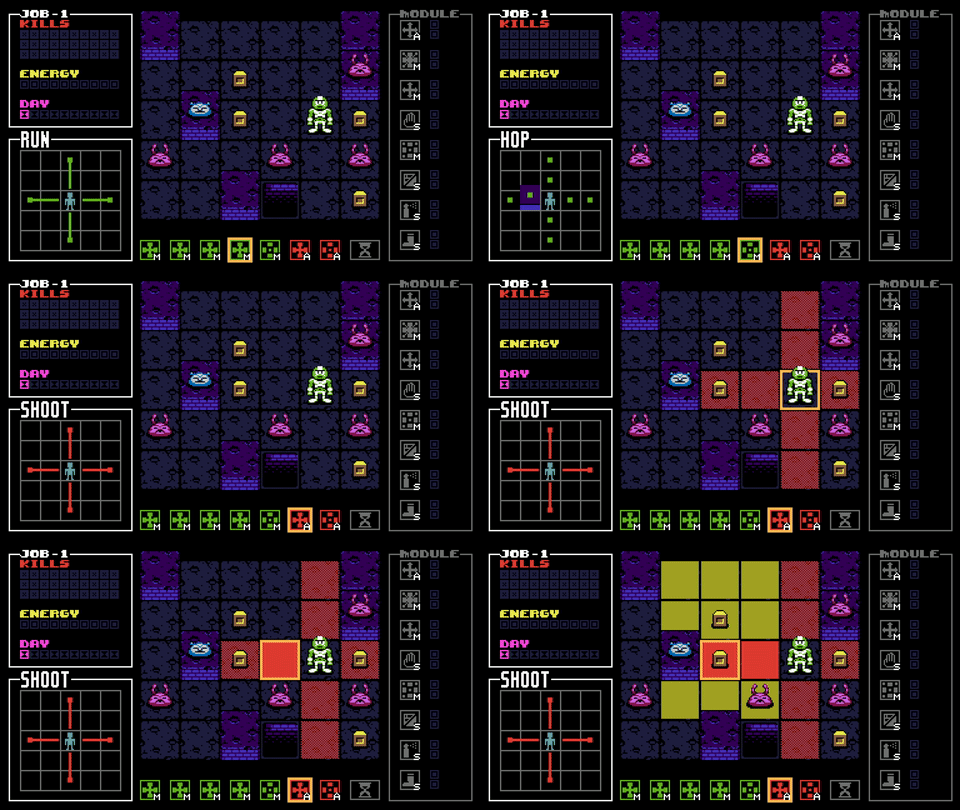
Again, they make it look so easy to design a procedural puzzle game, that generates such consistently interesting situations for you to solve, that makes you wanna keep coming back. And this one’s even better than Devilition, somehow!
This one focuses even harder on “Hand Management”, one of my favorite board game mechanics, although perhaps it’s more like a deckbuilder, since you cycle through them all and use them all each “day” (and then you get ’em all back), and also because you keep buying new cards to add to your deck?
Related to buying new cards, Bug Hunter has an really clever design choice, that doesn’t sound like a big deal but it is. When you buy a new card for your deck, you must replace an existing card… but you can replace one that’s already “tapped out” for this day, and the new card won’t be–it’s usable right away! Basically an extra turn every time you buy a card!
This is huge–a common problem in games like this (where you build a deck while playing) (or an engine) is, any time you get your deck into an ideal state for the run, you usually wanna stop changing it, and just keep running it, ’til you win. But in Bug Hunter, you wanna keep changing it, because each time you do, you get an extra turn, which is so hugely valuable you absolutely need to do it as much as possible!
The UI is a marvel, this is basically a tactics game with no tutorializing, but you can absolutely figure it out pretty quick. It’s almost “Into the Breach” levels of UI elegance, and does a similarly good job at showing you what WILL happen if you press confirm, whenever you’re making any decision.
The different enemy types throw really interesting wrenches into your plans, with the different mechanics of their evolved forms, and with the way they randomly spawn. There are a lot of surprising interactions that you keep discovering as you play, making the game feel delightfully deep, and replayable, as you want to master how to take advantage of those interactions!
Just an absolutely genius game, don’t think I’d change anything about it. Eh, I guess one thing I like better, in Devilition, is how it always ends in a boss on the 10th level, which is an exciting finale. Bug Hunter doesn’t really even have an ending, nor credits screen, does it? (Admittedly maybe that’s good for replay value–going for longer and longer streaks–that’s pretty fun too.)
16 – Elfazar’s Hat
[My Description: A top down shooter across 5 stages, but it does NOT autoscroll, you can take your time.]
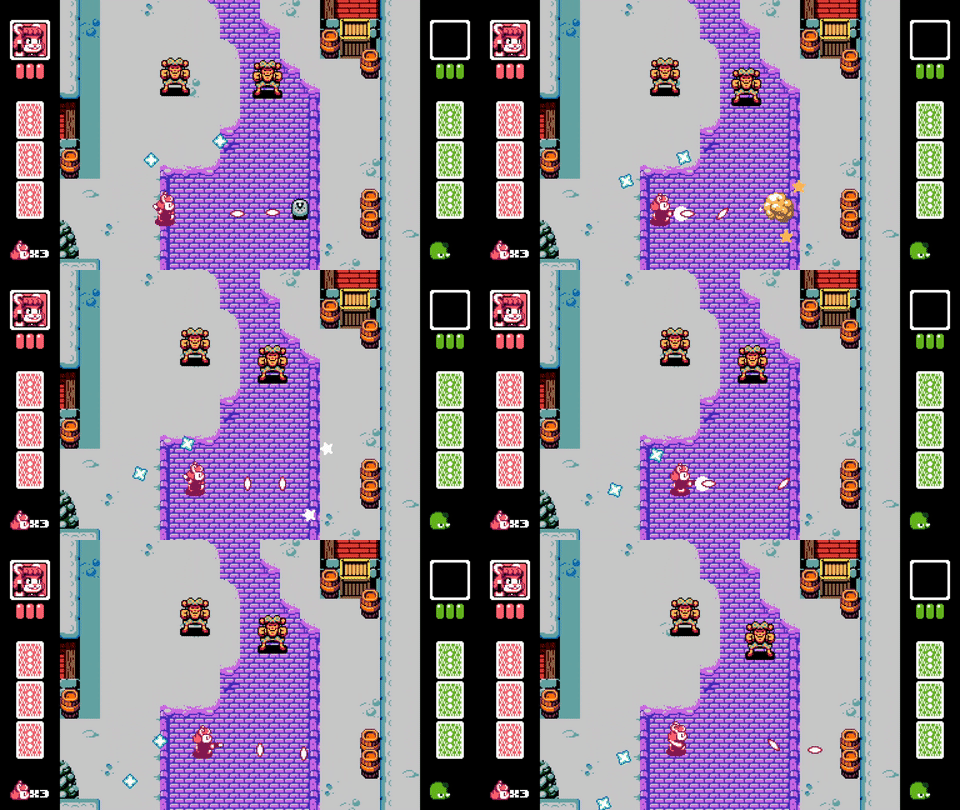
This is REALLY hard to write about. What do you say about a simply perfect action video game? The controls are perfect, the music is perfect, the levels are perfect, the art is perfect, the enemies are perfect, the bosses are perfect, the combat is perfect.
Perfect in the sense that they’re exactly what I want for this style of game, and this style of game just OWNS. Why the HECK don’t people make more games like Elfazar’s Hat? It’s kind of a holy grail game for me: pixel art, top-down shooter, scrolls but not automatically. There are crazy few games that fit that criteria, in my opinion. Jackal, Pocky & Rocky, Ikari Warriors… IDK what else?
Honestly most shmups should just ditch autoscrolling, and let you move at your own pace. I love shmups but I’d give up most shmups I’ve played, for just a FEW more games in this style.
Notice how easy of a game it is (you even get infinite continues! Which you won’t even need after your first playthrough). I have a hunch that the better UFO 50 games tend to be easier, and the worse ones tend to be harder ones. NOT because easy=good, hard=bad, but rather, when the designers were struggling with making a particular game fun, I think they’d reach for “eh let’s just make it hard, that’ll make it more exciting” solution.
Or maybe I’m just biased against hard games? I don’t define myself that way, but maybe it’s true. Actually, i WOULD have liked an optional “Hard Mode” for extra replay value, in Elfazar’s Hat!
(Also once again, props to the devs for nailing the controls scheme–see also my “Overbold” review. Holding shoot to strafe, is S tier.)
If the game is so “perfect”, why’s it down here? The usual reasons–it’s not very innovative, and it’s also quite short, being only 5 stages (and 2 of them aren’t even full-fledged stages). But gosh, there is ZERO padding in this game, it just MOVES and MOVES, cool sequence after cool sequence. (Eh maybe stage 2 is kind of padding, it’s an arena level.)
15 – Camouflage
[My Description: Top-down designed puzzles, where you’re a chameleon navigating between predators, changing colors to not be caught.]
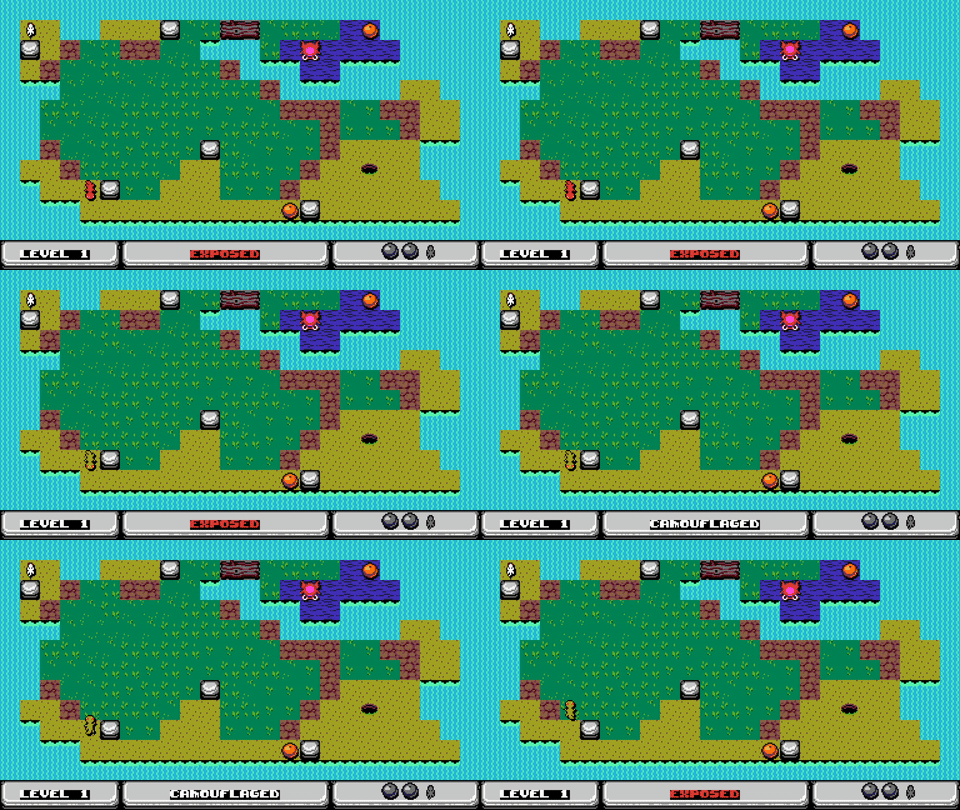
Extremely intuitive and elegant, and just a really cute idea–everybody loves chameleons! I bet many people have had the idea “oh there should be a stealth game where you’re a chameleon”, although I don’t know if I’ve ever seen one (well, MGS3 and MGS4 kinda!). But now, forget it, cuz I don’t think you could ever fulfill the idea any better than Camouflage now has.
In Devilition, my main complaint was that the UI is not very helpful to the player, so there’s constant worry that you’ll make a mistake that ruins your run. And I’m guessing this is by design, because otherwise the game would be too easy, or just not interesting enough.
So it’s all the more impressive that Camouflage’s UI is the opposite, it’s SUPER nice to you! It shows you where the enemies’ LOS reaches, and it even has an undo button! This is so much more fun to me–nothing big to worry about, it’s just my brain versus really well-designed puzzles.
Let’s just appreciate in general how there’s nothing annoying about Camouflage. This might be the least annoying game I’ve ever played. Are there even any words to read in it?
It’s even got dynamic difficulty–if you don’t wanna collect all the optional fruit, you don’t have to! If you wanna skip past some level on the world map, that’s fine too! (Although from what I can tell, pretty much everyone who’s played this game has 100%ed it, because it’s so addictive.)
There aren’t many puzzles, and I’m ok with that! I always prefer a shorter game to a long game. Well, unless there’s no replay value, that’s bad. But I absolutely plan on re-playing this every couple years or so. Some puzzle games you can’t do that, because the solutions are simple realizations about how the physics work. But these are more like a series of complicated steps, that you’ve definitely forgotten a month after you play it!
14 – Pilot Quest
[My Description: Idle game mechanics let you build up resources, to use on top-down action expeditions, where if you don’t get home before your resources run out, you lose everything you found.]
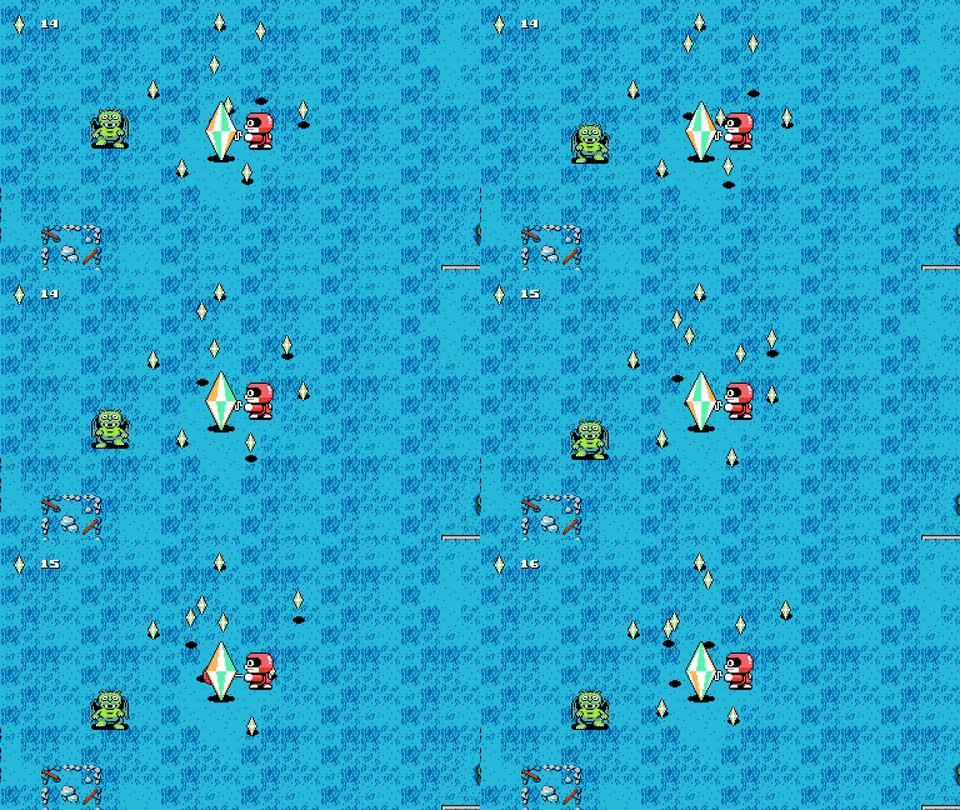
There’s a game loop I’m calling “expeditions”, that a bunch of UFO 50 games make great use of: it’s where you need to leave the safe place, go explore into danger and find rewards, but then must return to the safe place before you lose everything you found. Porgy, Divers, and Grimstone all have this.
But Pilot Quest is the BEST use of it! It’s such an exciting form, of constant risk vs. reward decision-making while exploring, and I love games where your own hubris is your biggest enemy (e.g. Overbold)! It’s also an elegant way to make the player feel getting stronger, as they can venture farther out!
My favorite part of Pokemon Blue was the Safari Zone, and this is one of the closest feelings I’ve got to that! It’s not the same thing, but it captures the vibe.
When people describe this game I think they focus too much on the idle game part, but that part of the game is actually pretty bad. There are hardly any mechanics there, like the bare minimum really. (Although, it IS super cool how the idle game progresses while you’re playing other UFO 50 games! Good elevator pitch, everyone loves that twist.)
BUT, the idle game IS an ingenious addition to Pilot Quest: because of how much it improves the expeditions! Having to “wait” between expeditions, makes each expedition feel valuable and exciting! And, you get to find and collect items for your idle game engine, which is fun, because as your idle game engine is improved by those rewards, you get to go on longer and longer expeditions! Ingenious loop.
We’ve also got some other brilliant additions, to improve replay value, like the slight randomization of the world, and how every time you beat the game and start over, you stacking prestige bonuses… Extremely nice touch.
I guess this could rank higher if the combat was a little better? But meh, it’s not about the combat anyway. Or maybe if the game was less ugly? Meh, it has a retro charm to it, I like it.
13 – Campanella 3
[My Description: A pseudo-3d space shooter, where enemies and blocks come towards you from the distance, for you to shoot at or dodge.]
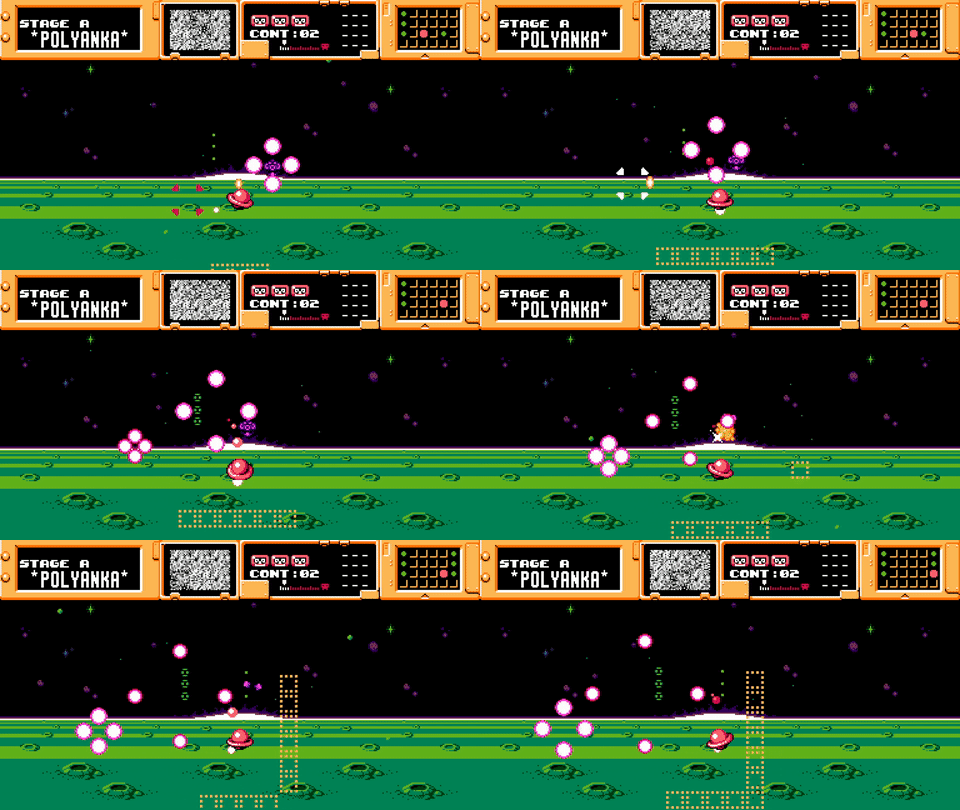
Like Barbuta, this somehow gives me a deep nostalgia, even though I didn’t even play anything like this growing up. I guess Campanella 3 is EXACTLY what I wanted from UFO 50: games that would shock me in how much they felt like something I might have loved in my youth, and yet, were nothing like anything I’d ever seen. A true alternate reality!!!
I had already loved Campanella 1 and 2, and intentionally left 3 as one of the last games I’d dust off, near the end of my journey for 50 golds. I think this was great for roleplay, as whenever I’d see screenshots or brief clips of the game, it felt like being a kid in the 80s, being hyped up for the 3rd game in an iconic series, having my mind blown by seeing magazine pictures of it, wondering how the technology worked.
Anyway, I wish real games in the era used the Campanella 3 style, because GOD I love looking at it, AND playing it. It’s such a clever visual approach, and so unique. (Well it’s somewhat like Space Harrier, but Space Harrier looks and plays disgustingly, IMO.) The shooting and dodging feel perfect, and surprisingly easy to get used to, for such a weird fresh concept.
I love the space dust and asteroid pieces are flying past the screen, like the old windows screensaver, but way prettier; and I love the colorful planet or asteroid field backgrounds, that add character to each stage. I love how cartoony everything is, like your cute red ship, and the wacky abstract bosses have a certain perfect retro video game quality. Either this or Seaside Drive have my favorite aesthetics of the pack. Great music and sfx too.
It’s really fun to try to kill 100% of the enemies/objects in an incoming wave. Cuz you can just BARELY do it, if you approach the right way. It’s puzzley. Some particular wave patterns keep coming up so you can try different approaches. I guess many shmups do this but it feels better here, the waves are more discrete.
The bosses are super fun too, I especially love the one with the fists coming at you from the sides, that you have to keep shooting to push them back. But when you position yourself just right, to get a ton of hits on the boss?? SUBLIME action game feeling.
12 – Porgy
[My Description: An metroidvania, where you keep venturing deeper underwater in your cute submarine, to find new upgrades, and then you return to your base to save your progress, and to refill your oxygen tank.]
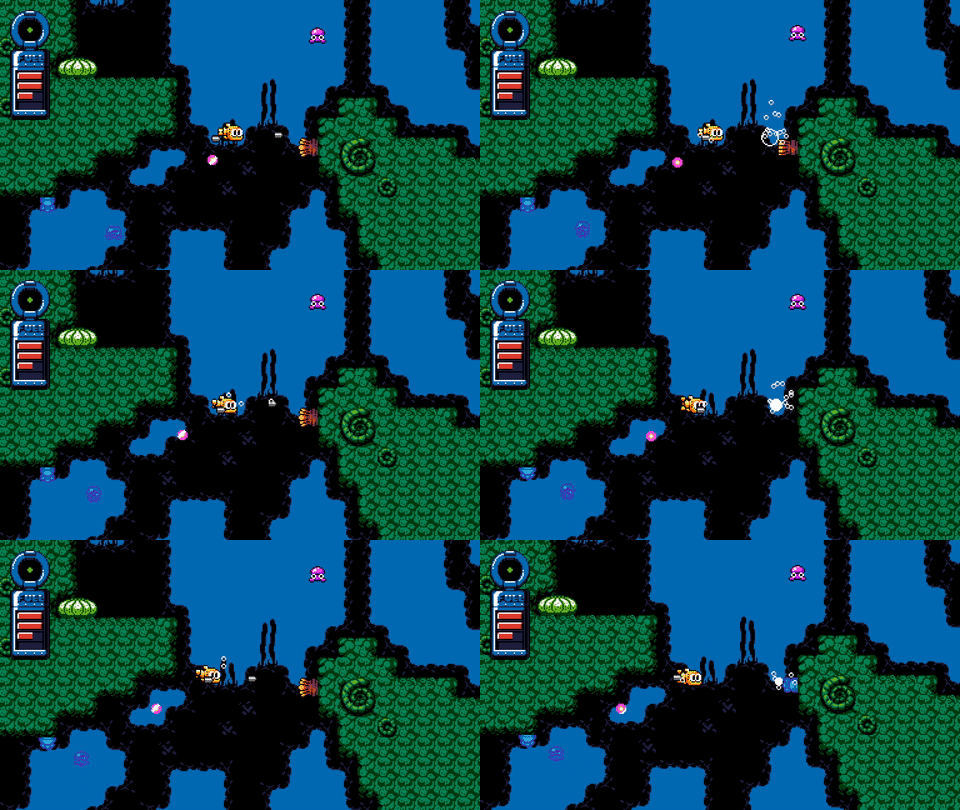
I was completely enraptured by Porgy, and played it for 6-8 hours straight until I beat it, which I basically never do in video games–my attention span is pretty low, my gaming sessions never last more than 2 hours.
Like in Pilot Quest, there’s some video game magic in this “expeditions” game loop for me. “Hubris” is once again your biggest enemy. The allure of going a little bit deeper and finding more stuff is so enticing to me. Except, in Porgy, every time you complete a run, you can IMMEDIATELY go out and start a new run, no waiting. This is probably why I got so addicted to Porgy. (Pilot Quest’s wait-based loop is good too, but as a novelty–I don’t want to play too many games like that.)
The bosses are a cool innovation here: you don’t find the bosses, THEY find YOU, when you least expect it! Probly needs a content warning for people with sea phobias, ‘cuz these guys JUMP SCARE you, while you’re minding your own business, it’s so fun! And they will very likely kill you a bunch, ‘cuz you’re probably not strong enough to take on a boss on first sight–you probly need more upgrades from its general region, first. (And then you get the cool feeling of “hunting down” the boss you wanna kill, a unique feeling.)
Oh right, the game’s a metroidvania too?? So you also get a great metroidvania power curve–at first your oxygen tank limits you to like, what, 30s long expeditions? And the weakest shortest-range attack imaginable? These weaknesses make it enticing to explore and find upgrades.
The lack of map probably bothers many players, I didn’t mind it though–it increases my feeling of mystery/wonder for the world. I enjoy the feeling of being lost, as long as I keep finding things, which was true here. There are landmarks to notice, and I think most screens in the game are distinct enough to remember. (I love the sunken ship mini-biome, more like that woulda been good.)
OK but here’s my main problem with the game, and it’s a big one. It’s how they limit what you can equip. The same problem as Vainger–you get all these super cool upgrades, but you can basically NEVER equip them!! Some of the upgrades are basically “keys”, and your only progression is to get past “locked doors” (metaphorically) to get more upgrades behind them. So you should ONLY ever equip the upgrades that are “keys”, otherwise you’re wasting your time. So you can never equip any of the cool combat/mobility stuff!!!
This kinda ruins the game–I still love it, it’s still crazy high on my list, but it COULD have been a top 5, if not for this issue. Luckily unlike Vainger, you’re still getting your oxygen/health upgrades, so that’s still a satisfying power curve.
Also… I think I would have liked MORE oxygen upgrades. By the end, I woulda enjoyed being almost completely unshackled, to explore the deepest areas very freely. But I was still very frequently (and tediously) having to retread the same path back to base, to refuel. Maybe just, an upgrade where every enemy you kill gives you a bit of oxygen? That would help you explore, while not helping too much for the final boss.
All those negatives tempt me to take this out of the Masterpieces tier, but let’s not forget, the graphics are REALLY cute, and the atmosphere is great, the story is fun, and it’s got good music. Those things are all important, just not as fun to write about at this point.
11 – Cyber Owls
[My Description: An action game with 4 missions, that each have completely different gameplay, and then a 5th, longer mission, where you keep swapping between the gameplay styles.]
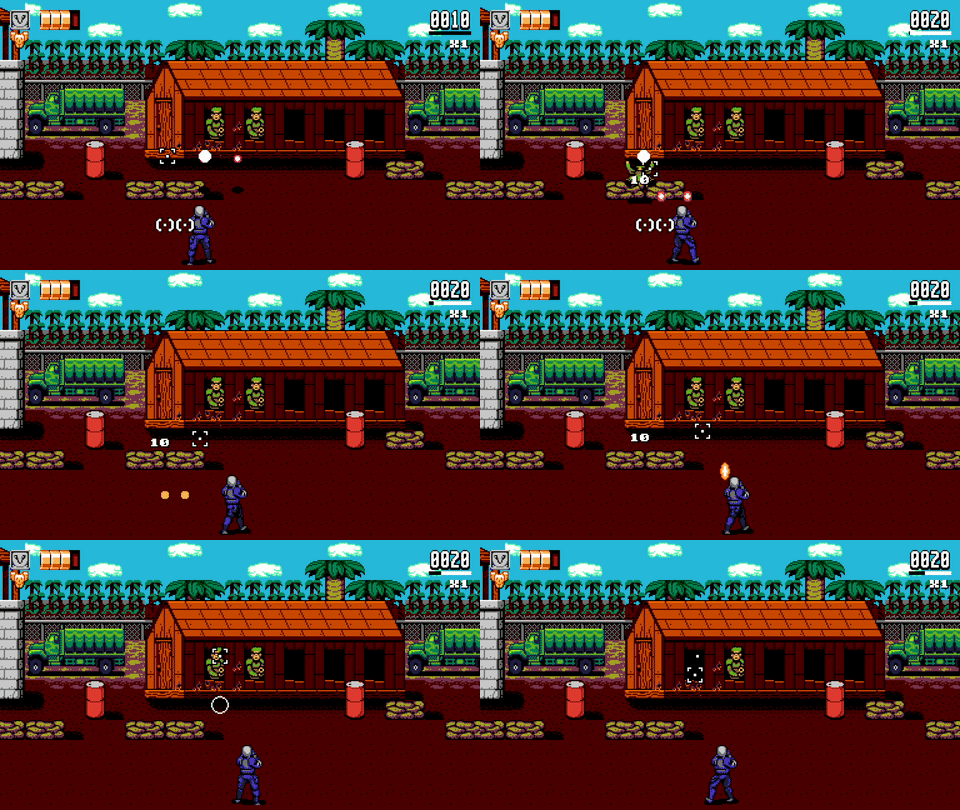
Just a brilliant idea, completely changing the gameplay each mission like this–you’re bound to enjoy at least one of the styles; and if you don’t like one, you won’t have to tolerate it for very long (unless it’s the stealth parts)!
For me, I like the vehicle sidescroller the least, just ‘cuz there’s not much level design going on. The beat ’em up is pretty shallow, but I like the successful mixing of platforming in with the fighting, and the ascending level design is fun.
Then the behind-the-back shooter I absolutely LOVE, it’s like Campanella 3 but maybe even better, ‘cuz it kinda adds reflexy dodging from Valbrace, and the panoramic environment is more interesting to fight in and be surprised by.
Then I super DUPER love the top down stealth shooter! Like I said for Elfazar’s Hat, top-down pixel art shooter is a criminally underused genre. And top-down stealth is even MORE underused IMO! I’m a surprisingly big fan of Metal Gear 2 for the MSX, and this is similar, better even–the level design is better here (MG2 doesn’t have enough exploring, and is obsessed with gimmicky rooms), and this game adds fun management of very scarce combat resources (ammo, tranq darts, grenades), which ALSO makes finding secrets and dead ends more satisfying, since they tend to give you good resources.
While playing through the 4 missions I was thinking “I hope they have a final mission that mixes all these, that would be sick”, and was so happy, that’s exactly what they did! And it’s huge, and epic, and it ROCKS! It’s an entire 2nd half of the game. It almost felt like a WarioWare thing, but not really. I was also happy to see the stealth mode take center stage, cuz it’s my favorite.
It sounds scary, when they tell you “if you die once in the 2nd half of the game, it’s game over”–but actually, you have tons of health, so you probably won’t die (I didn’t!). So as a result, this trick just makes the 2nd half of the game extra exciting and epic.
The game’s presentation does a lot of work to make everything feel exciting and epic too, with the world map, and lovable/cute squad of heroes, and their funny/corny dialogue and one-liners, and the pulpy story and villains. It’s all reminiscent of Contra: Hard Corps, but even better, there’s even more charm here.
Also the “rescue mission” minigame is cool, although I barely saw it. Making you beat it for the “Gift” was a good idea, otherwise I wouldn’t have bothered, but I like it, I’d have liked to see more of it! Surprisingly difficult and puzzley.
10 – Grimstone
[My Description: A JRPG in the tradition of Final Fantasy 1. Pick your 4 party members at the beginning. BUT it’s in a wild west desert setting, with guns and demons!]
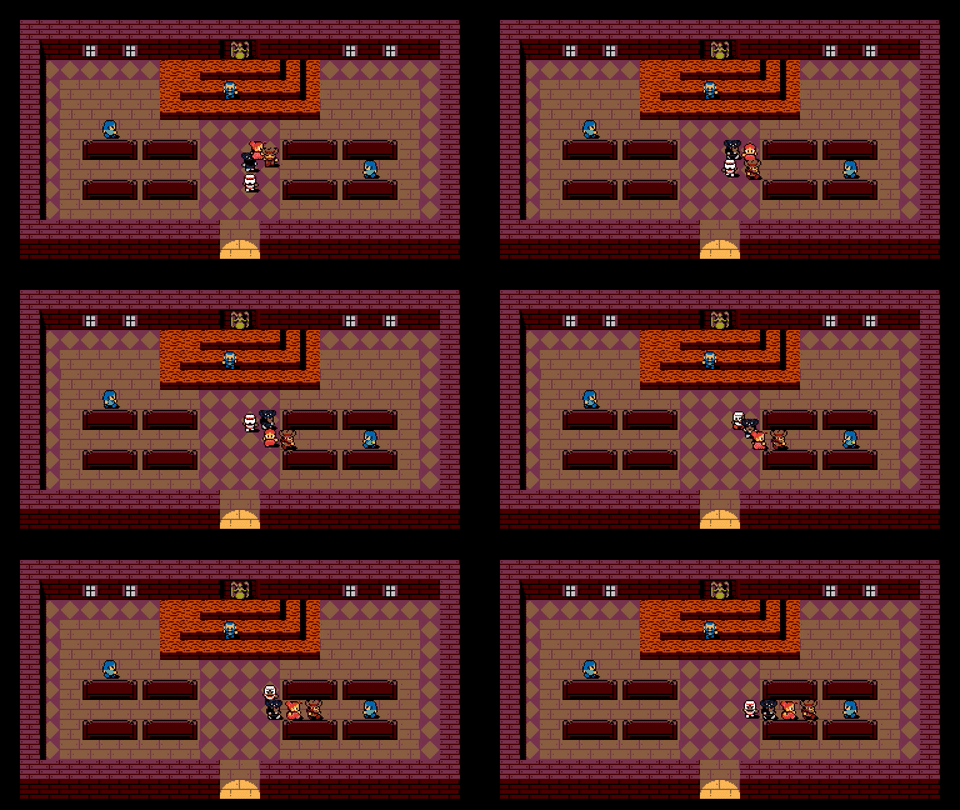
JRPG is definitely NOT my favorite genre, and I dreaded this one, especially after slogging through Divers, one of the worst games I’ve ever finished. AND, one thing I do like in a JRPG is plot and characterization… neither of which Grimstone focuses on! So I was pretty shocked that I liked the game immediately, and then loved it more and more!
The opening made a GREAT first impression–it’s SUPER quick, getting you into the gameplay quickly (my worst memories of JRPGs is slogging through slow openings). Picking your team off the bat is immediately interesting, and doing it during a saloon fire is clever and exciting, AND, is a great source of initial intrigue–who set the fire, why, and why were we gathered here?
Then it quickly hits my favorite gameplay feeling of JRPGs, which is exploring wilderness–like, that’s the only part of Pokemon games I enjoy, when you’re exploring a Route, or a mountain, or a cave, it’s so adventurous and atmospheric at that. Grimstone nails that feeling INSTANTLY, and continues it for the whole game! You really only ever know your high level goal–besides that, it’s an exploration game, and it feels like YOUR adventure.
And what a likable, unique, atmospheric setting to explore! I was excited to talk to every NPC to get a little bit more lore about the land of Lonestar, and its current situation, which I found very intriguing and charming.
For the game design, I’m a HUGE fan of how they handle saving and dying: You only save in towns, never mid-journey or mid-dungeon. And when you die, you wake up in town, and lose TONS of money, and it instantly autosaves… this SOUNDS cruel and difficult, right? Almost makes it feel run-based, going on expeditions (pretty cool acutally). But still, it’s mean, right?
…BUT here’s the thing, you KEEP any exp and levels you gained! That’s huge. That means, even if the next place you wanna go is a bit too hard for you: you should just try it, ‘cuz it’ll be worth the most EXP anyway! Don’t grind near town, that’s just less EXP! And hey, if you manage to clutch it out ANYWAY, and get through the dungeon/journey underlevelled, just scraping through, it feels awesome!
OK, there’s still a temptation to grind for MONEY safely near a town, so you don’t lose it all. However, each dungeon drops WAY more money than the last, so I found it still better to just push on to the next content. (You also keep any items you found in the dungeon, when you wake up in town, so that’s huge.)
As a result, expensive weapons/armor are more like a reward, that you get every time you go a pretty long time without dying. I think that’s smart, and satisfying. Certainly a more interesting approach to money than most JRPGs I’ve played, where it’s boring.
Whoever balanced this game is a game design GOD. Everytime I got a new gun, it felt SOOOO powerful and good! And every time I reached a new dungeon, I’d be like “holy crap this is insanely hard”, but then, I level up a couple times, or maybe I get a new gun or new ability, and suddenly the difficulty’s perfect! And I feel so cool every time I beat a pack of enemies that was so intimidating a second ago.
I didn’t try all the characters, but from the research I’ve done, sounds like they’re all pretty different, but still well-balanced. (The most popular guide puts every character in “A tier” or “S tier”, lol.) I was personally very satisfied by the characters I chose, and excited by their unique aspects throughout the game (I used a great trick with one of my characters on the last boss!!)
The music is great, although I would have loved more tracks.
The “timed button press” attacks are not an RPG mechanic I enjoy, but I liked it enough here, it reminded me of golf games, and I like those. And I liked that new guns kept changing how it works, that’s key to making me enjoy a system like this.
9 – Night Manor
[My Description: A traditional point-and-click adventure where you must escape a spooky house.]
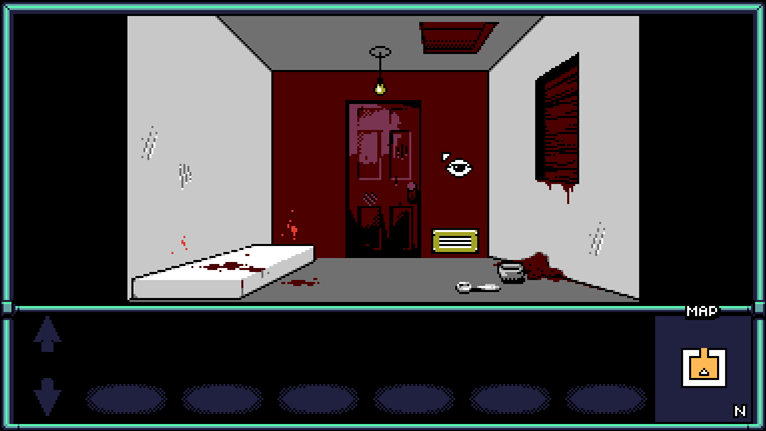
I’ve played a few point-and-click adventure games in my time, and Night Manor MIGHT actually be my new favorite, surprisingly.
There’s nothing mindblowingly good about it. The main reason it’s good is, it’s the least obnoxious game in the genre! It’s funny how annoying games in this genre can be. Typically because of:
- Puzzles that are way too esoteric/cryptic, that nobody in their right mind would solve without brute force, trying every inventory item on every environment object.
- Overuse of the worst puzzle tropes of all time, like Lights Out, Simon, Connect the Pipes, or the ultimate: 4×4 Sliding Puzzle.
- Cheap deaths.
- Softlocks (or worse).
- Tediously complicated controls for no reason (USE is different from OPEN? Are you INSANE?)
- Having to read 12 pages of text sometimes to understand what’s going on (MYST).
- Having to read the worst and longest dialogue trees ever seen, for important clues, possibly with the worst voice acting you’ve ever heard (nancy drew).
- The game’s length waaaay overstaying it’s welcome.
Night Manor doesn’t do any of that! So that alone puts it above most games in the genre. I mean, you do have an inventory, but it’s fun here, because the puzzles involving it are totally reasonable! You do get to read stuff, but it’s all short! Learn from Night Manor everyone: just make your point-and-click adventure game EASY and digestable! I play these games for the vibes (or jokes, in some cases). (Also make them shorter!)
Aesthetically, this game was made for me, as someone who loves retro-looking pixel art, and loves the non-serious side of horror vibes. (This is my favorite combination of those two things, since Castlevania 3!) Every new room in this game, was exciting as an opportunity to take in the atmosphere and all the little details.
They went above and beyond in making the pixel art look extremely era-appropriate, it’s heartwarming. They used some tricks for this–I loooove the classic use of DITHERING, that’s such an underrated artistic trick! (I’ve always wanted to make a game called “Dithering Heights”. All I have so far is the title.) They also sometimes have an object in the environment, with an obvious off-color rectangle around it, “accidentally” hinting the object will probably move later–old Hannah-Barbera or Scooby Doo cartoons used to have this, spoiling certain scenes, it was funny to notice it here. These tricks tickled my nostalgia, exactly the way I wanted UFO 50 to do.
In case someone reading this hasn’t played it, I don’t want to spoil the “scary” aspects, but I loved those too.
So yeah, masterpiece, the only points I have against it are: it’s not particularly innovative, and the story definitely coulda been more ambitious (I did enjoy it though!).
8 – Rail Heist
[My Description: A sidescroller stealth action game in the old west, where every level is on a moving train! Also weird turn-based mechanics after you get spotted.]
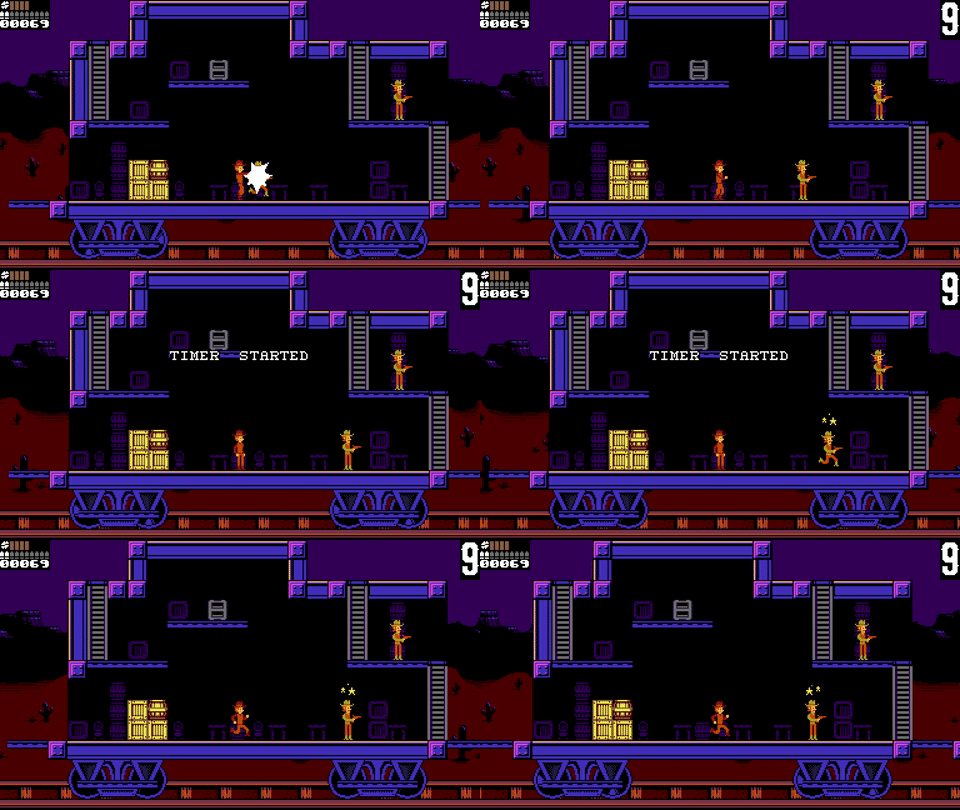
My favorite level in any game, is the TRAIN level. So a game where every level is on a new train??? IM 1000% SOLD.
Possibly the most impressive gameplay design in UFO 50. Each level looks so simple, but those simple pieces interact with each other, in tons of surprising ways, yet still intuitive. “Hmmm, can I do…this?” was a common phrase here for me, followed by “hahahha yesss”. THEN, followed by me facepalming, as I completely forgot another interaction after, killing me! (Lotta good slapstick comedy in this game when you mess up!)
I’ve never been 100% sold on the idea of “immersive sim”, until now–it seems to me in games like that, you either (1) find one cheap trick, that tends to work in every encounter, so you might as well keep abusing it, OR (2) each encounter is so specific that it might as well be a puzzle game–not much self-expression or creativity for the player. Rail Heist MAGICALLY found the perfect golden middle between these! Each stage never felt like a pre-designed puzzle, but I still felt I had my own creative favorite “styles” of solving problems. Exactly what I want from this genre!
It’s a great game to watch someone ELSE play a bit of, when you’re done with it–just so you can appreciate how differently people approached things and solved things.
What definitely helped is the 3 different “badges” you can get for clearing a level in special ways (speedrun, 0% kills, and 100% kills). Not only does this provide some nice replay value, but it is another way to encourage you to try new approaches to things! Amazing. I stuck with every stage until I got all 3 badges, my first time through, and loved every minute.
Maybe I’m ignorant, but I have NEVER ever seen anything like this real-time-turn-based system. It’s WEIRD, but I love it! Many stealth games can be trivialized with clever movement and understanding of the vision cones–but not here, because you can’t possibly outmaneuver them, because “their turn” will comes and freeze you in place for a bit! Although, you CAN set up a trap… or hide… but the level timer exists too!
And etc, like most UFO 50 games, love the charming graphics and setting, and tiny bits of exposition between missions. And the level design stays interesting throughout, adding good new mechanics and stuff. ABSOLUTELY a masterpiece of the pack.
I think the only reason it’s not higher ranked, is maybe it’s a LITTLE exhausting to play? Feels like a brain workout. And not QUITE as much replay value as some of the roguelike-ish games.
7 – Pingolf
[My Description: 18 holes of 2d sidescrolling golf, in bouncy pinball-like environments.]
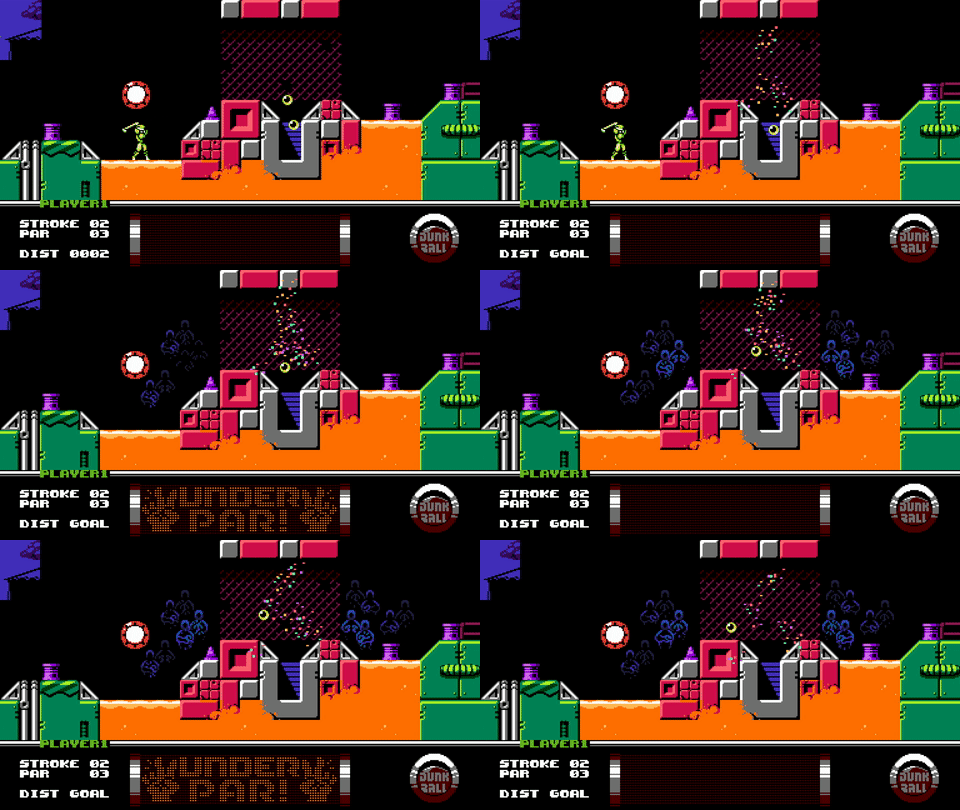
When I boot up UFO 50 looking for something to play, there’s like a 50% chance I just go ahead and play Pingolf again. Even though it was one of the first games I beat and first ones I got the cherry on, I just can’t stop going back, it’s perfect painless casual fun.
2d sidescroller golf was always a holy grail game for me as a kid. A game like this came to me in a dream one day, but it wasn’t a real game. I always searched for a game like this, but could never find one. Nowadays they do exist, but IMO, still not enough of them! As soon as I saw Pingolf in the UFO 50 trailers, I was sold on UFO 50.
It’s a fundamentally awesome concept–the most pure form of the “platforming” genre, if you think about it! You’re massively committing to your “jumps”, BUT, you have incredible setting up control over them, before you commit! (I complimented Mooncat on the same thing!) And you can ONLY jump, no running! And you can ricochet, one of the best parts of video games IMO.
The “pin” part of the name, is referring to everything being very bouncy (i.e. pinball), and that’s a great design choice. The more bouncy things are, the more dynamic and deep it is, and more surprising things can happen, either by accident (funny) or by the player’s experimentation or discovery (cool!). This fixes a “flaw” I have with my previous favorite game in the genre, “Desert Golfing”, where the physics are so predictable I can pretty much get a hole-in-one every time, after playing a lot.
Pingolf is a prime example of one thing UFO 50 is amazing at–difficulty curves. The first time you play it, you’re dumbfounded by how hard it is: “I will never get 1st place in this game,” you say, as you get a score of 40 over par. But by your SECOND playthrough, you’ll absolutely notice, you’re way better. And again and again, and before you know it, you’re impressing yourself, with your 5000 IQ shots! UFO 50 is so friggin’ good at this trick.
But “hard” is a stretch, because this game is so forgiving and friendly. You WILL reach the end of the game every time, you can’t get “knocked out early”. I love this, and wish more games worked this way. This is such a fair way to let you practice, without punishment, so that you can keep doing better, and eventually get the gold (and cherry). Punishment can elevate games, but they can be surprisingly good without it! (Rakshasa and Caramel Caramel probably should have worked this way IMO–but thankfully there are terminal codes to let you do it.)
The “dunk” button is a great innovation, which is pretty hard to do in the golf genre! Adds a lot of depth in all the ways you can use it, and discover new opporunities for it in each map. Also a reason to carefully watch your shot play out, and maybe react cleverly to “fix” a bad shot. And because it’s timing based, it adds new skill expression, and somewhat reduces the problem in golf games, where you could theoretically just memorize your favorite angle+power, on every hole.
The ONLY reason this misses my top tier, is because it’s short and small. This would be my #1 vote for which UFO 50 game should be expanded by the devs–just gimme like 2 more courses!!!
6 – Warptank
[My Description: A sidescrolling stage-based puzzle-platformer, where you’re a tank that sticks to walls, and can “warp” to the ceiling and stick to it, and also can shoot enemies and obstacles.]
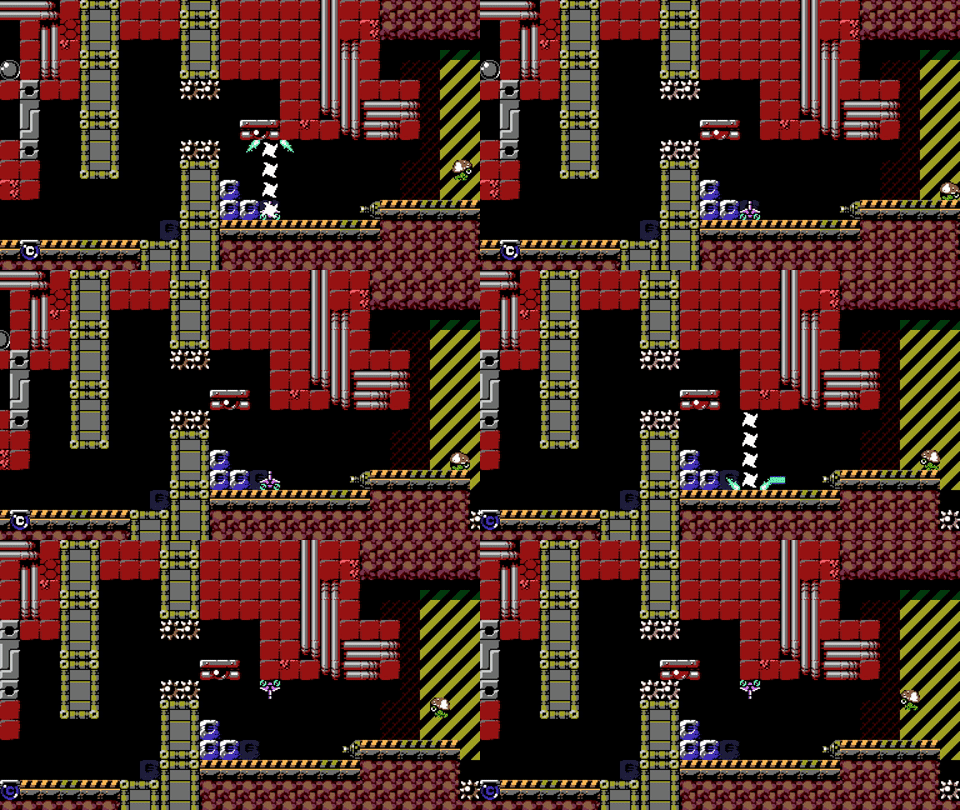
I think we need more platformers without jumping. It’s so much more interesting! Captain Toad is a top 3 Mario game for me.
The main innovation here is the “warp” movement mechanics. At first I thought it just another “Metal Storm” or “Vainger” gravity flip thing, but no, thanks to some other clever movement restrictions (no basic jumping), the devs can effortlessly make puzzley little “warp mazes” for you to navigate! The first time you crawl up a 45 degree angle floor, and you start walking on the wall, you realize the implications.
These little mazes never stop being fun to me, even the simplest looking structures give me several “aha!” moments, of seeing where I’m supposed to go next. They’re elegant! AND, like many UFO 50 games, they keep adding great new simple mechanics, to keep surprising you with even more “aha!” moments, like movable boulders, breakable blocks, 1-way floors, disappearing blocks, redirecting arrows, etc. Brilliant stuff.
All that is awesome… but that’s only a FRACTION of why Warptank is so good!!
The level design is nonstop VARIETY! One moment you’re solving a puzzle, then you’re shooting enemies, then you’re dodging lasers or crushers or bouncing projectiles, then you’re being chased, then you’re racing to get through a door. All this gameplay just WORKS amazingly well, the game could have focused on any ONE of these and been a great game.
The best example is levels where you’re placed in a tiny arena, and fight waves of enemies (or a boss). I usually hate this in games not designed around it (e.g. they’re so boring in Mario), but they’re super fun here. A big reason is that, you can only shoot upward (relative to your character), so you have to think really fast to position yourself to shoot correctly. And some of these arenas are asymmetrical which makes positioning really engaging. And it’s always a hilarious moment when you try to “warp” to a safe spot and warp straight into an enemy.
An underappreciated aspect of the game is the visual theme–it’s mysterious and very intriguing to me. Metroid 1 but better and sillier. I like that there’s no exposition, so you’re left wondering as you play what this world is, and what rules it plays by, as you notice little quirks–what’s up with the eyeballs you shoot to open the teleporter at the end of each level? What are these weird dead husks and statues you stumble across? What are these insane enemy designs? Why do all the NPCs seem to be sentient tanks?
Lots of secrets, including my favorite type of secrets: ones that seem to be there just for fun and lore and mystery–I freaking love those, that’s one of my favorite aspects of games.
My first time through the game I got REALLY frustrated at the hub world, because I got super stuck sometimes, and couldn’t find new levels. And I’m pretty sure this was a common experience! I have to drop it out of my top tier, for this reason alone.
HOWEVER, on my 2nd playthrough a year later, I had a much easier time, and it vastly improved my opinion of the game (I couldn’t stop playing, ended up getting the cherry too!). Now I’m planning to replay the game every year or two–so in the long run, I forgive this flaw with the game.
SSS TIER (These would be in my top 100 favorite games ever, by themselves)
5 – Avianos
[My Description: 8 missions of turn-based strategy on a 5×4 grid. Capture and hold 4 flag locations to win a mission. Each turn, you choose a god card, which determines which actions you’ll take, like building, producing, recruiting, moving, etc.]
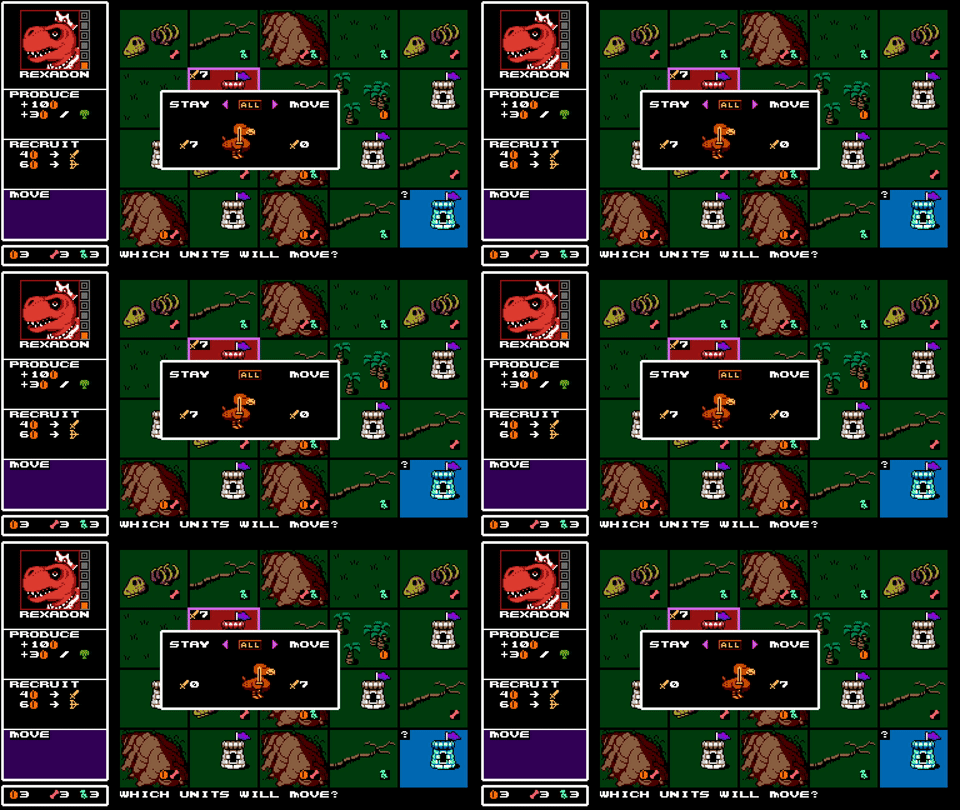
I love board games (maybe even more than video games), so I feel like I SHOULD be obsessed with this video game genre, but I’m always intimidated by them, or more likely, just too lazy to even try them–especially the ones that look complex and involved.
Avianos solves this mostly by being MIRACULOUSLY easy and intuitive to pick up. The game walks you through every decision you need to make! The genius UI, on the side of the screen, just walks you through the steps, from top to bottom, and you just get to sit back and answer its clear prompts!
No tutorializing needed. You don’t have to read pages and pages of text and introductory tooltips explaining every little thing. And they didn’t need to withhold half of the game’s mechanics, and introduce them 1-by-1 for several missions, which always makes me feel like I’m not playing the “real game” until I’m an hour in–NO, you’re truly playing the real game (an easy version of it), from your first turn!
But it’s not just intuitive. In strategic games, I’m always tempted to min/max and find a simple strategic trick that works well, and exploit the heck out of it, and strategically ignore half the game’s systems. Like in Hades 2, I just completely ignored anything involving mana. In Hearthstone, I just used aggro decks with cheap Charge creatures to win ASAP. In Avianos, I probably would have used a similar Aggro strategy to rush to the flags as fast as possible.
But the god/action system prevents that: yes I might try to pick Rexadon or Stegnar over and over, since “Move” is in the 3 steps of their turns–but I’ll be forced to watch as I miss out on getting value from the other 2 steps of their turns: if I don’t have any seeds, Rexadon’s “Recruit” action is gonna feel like a big waste, so I build little palm trees–but that’s done by another god, Brontor! And his actions are gonna feel like a big waste unless I use Trilock sometimes!! And now I’m tricked into truly playing all the mechanics.
I haven’t even talked about the real-time battles when 2 armies clash yet, which might be my favorite part! It’s so fun to watch these big battles, with like 100 birds on screen at once; it feels like one of those “battle simulator” games, but with better context.
I’m glad they didn’t do a simple 3 units rock/paper/scissors type of thing (i am so sick of that), this is a lot more nuanced–you have to carefully watch and STUDY what’s happening in each battle, to decide what combinations and matchups work well! So you can try to re-create those victories later. AND the environment itself is an important variable–it blew my mind once I realized, the terrain tile where the battle is occurring, determines the in-battle landscape. Very useful and fun.
And of course you have to carefully watch each battle, since you DO have some very light micro-management controls–probly wanna pull the powerful “Retreat” lever as SOON as you realize you’re gonna lose. TBH that’s the only micro-management button I really want in an RTS, anything else is janky or undermines the macro game, IMO. (“Raze” is really cool here though, when you realize what it does! Probably by seeing the computer use it, and then you say “hey wtf stop that, you can’t do that!!!”)
Also what a great campaign, 8 missions was the perfect length, didn’t overstay it’s welcome (cough diskonia), and I thought the difficulty was perfect as well. And if you lose a mission, it’s kinda fun, because the layout is randomized every time, so it really just means you get to play more Avianos. Gosh DANG this is one of the best games I’ve ever played.
OK this is getting too long but I have to mention choosing which god to upgrade is one of the juiciest decisions in UFO 50 (“I can move diagonally??? No way.”).
4 – Party House
[My Description: Roguelike deckbuilder with 5 scenarios and a randomizer mode. Spend popularity and money to improve each nightly party. If you draw 4 “star” characters from your deck in 1 night, before night 25, you win the scenario.]
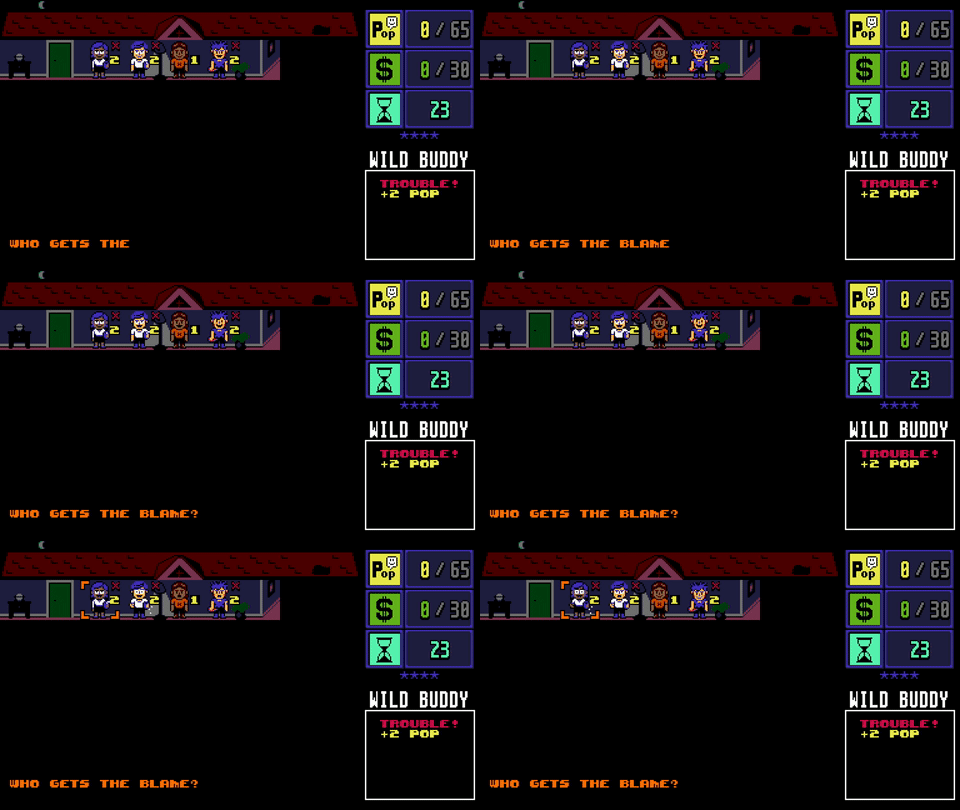
This is UFO 50’s “killer app”. Probably the most widely beloved game in the pack. I love it too–I think everyone with an interest in roguelikes should try Party House–even if they don’t care about the rest of UFO 50!!
It manages the rare feat of NOT being combat-oriented like most of the genre (e.g. Slay the Spire). I prefer this solitaire-like balatro-like style, because it feels more chill and carefree to me. But admittedly, it’s hard to design these in a way that feels exciting, and not just feeling like, well, solitaire.
The “trouble” mechanic is a great way to add excitement, a genius way to add a constant “push your luck” element to every turn. “Push your luck” is basically my favorite tabletop game mechanic–yes, please add it to every game ever!
I suppose the game is opaque for the first minute, that’s probably its main weakness–I’ve seen people bounce off of the game ‘cuz of that. But if you just suspend disbelief for like ONE MINUTE, and just follow the prompts, you figure it out. The “trouble” mechanic helps a lot here too, it’s a simple way to teach you why this is a game, and not a sandbox: “Why can’t I simply always keep clicking the door til the party is full…ohhhh, three “X” cards and the cops come, and the night is wasted. It’s a game!”
(And then that crappy 16 color realistic photo of a cop car gets slapped on the screen–HILARIOUSLY retro. How could anyone bounce off a game, with such a delightful theme and art?)
I love the perfect harmony between the theme and mechanics. Your deck is your ROLODEX of friends? And you draw from it by opening the door and seeing who arrives? And you start each scenario with mostly “Old Friend” cards in your deck? Awww that’s cute. Wild Buddy is better than Old Friend for your parties, but too many at once might summon the cops… I love talking about the game, ‘cuz you get great sentences like “Oh good, a Wrestler arrived, maybe use him to boot out the Monkey, and now might be a good time to use the Driver to get the Photographer and point it at the Cheerleader, and…”
…And has there ever been a better “win condition” in a strategy game, than becoming so popular that 4 freaking ALIENS to come to your house to hang out on the same night, and then you win???
Can’t recall seeing a roguelike do this “5 scenarios” style (in fact, maybe it disqualifies it from being a roguelike?), but I quite like it! It makes the game even more palatable and bite-sized and chill, perfect for me! And beating one scenario and moving on to the next, makes you rethink your approach to the game, due to the new cards. And then the final randomizer mode is a crucial addition, to give you that longer tail of replayability.
This is not as deep or replayable as, say, Balatro, and doesn’t allow as much player creativity. You’re not gonna “break the game” like you can in Balatro either. But I think it has just as much charm; and simplicity can be nice too! This has a clearer risk/reward puzzle going on, than most games in the genre.
3 – Campanella 2
[My Description: Fly around in generated open world stages, filled with enemies, and sometimes get out of your ship and run around. Find 10 stars to unlock the exit door to the next stage.]
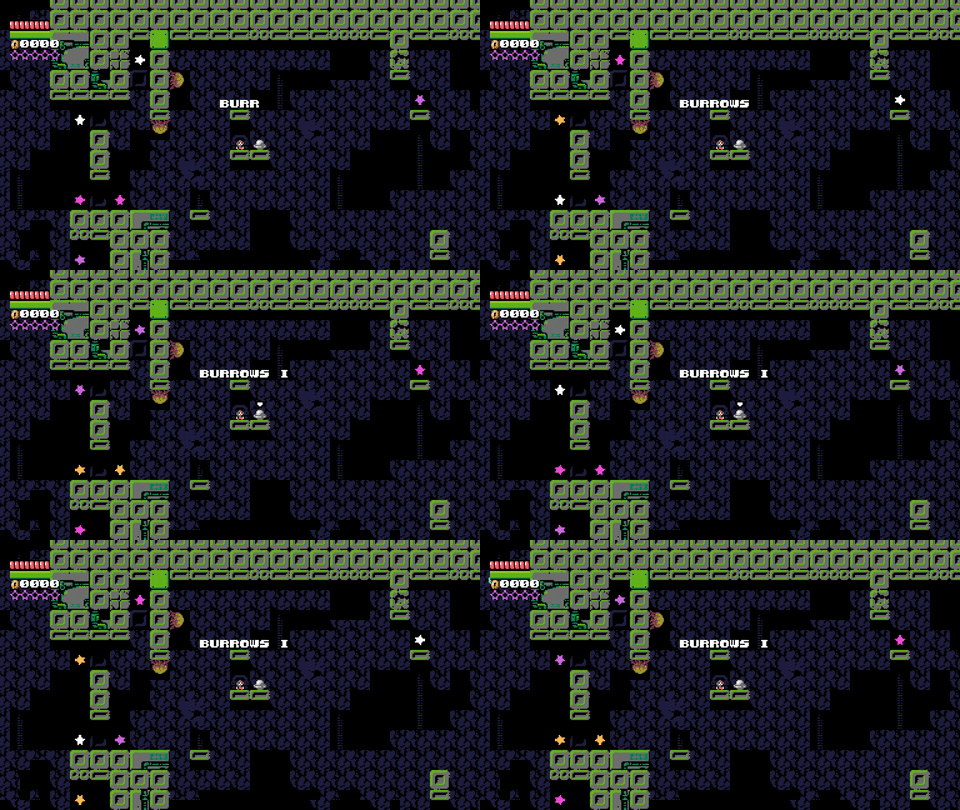
LOL, can you imagine Campanella 2 being released in 1987? YEAH FRIGGIN’ RIGHT, this is the most “post-2010” game, in all of UFO 50. This is literally just Spelunky 3.
Like many roguelike enjoyers, I worship at the altar of Spelunky. And even if Campanella 2 was just basically a space-themed Spelunky reskin, it’d be super high on this ranking. BUT, it’s so much more than that! There’s tons of big twists to appreciate here.
The hardest aspect of this game is, not running out of fuel. That’s fascinating! It means the game is perhaps more about “spatial awareness”. It’s about smart navigation, by finding a balance of exploring efficiently but also thoroughly. I notice my brain is working very hard on routing when I’m flying around in this game. There are also tricks to figure out, like how stars themselves give fuel, so sometimes when they’re clustered you shouldn’t grab them all at once.
On the other hand, I always felt the hard part of Spelunky is just “being super duper careful not to get hit”, which IMO, is not very interesting, and always bothered me.
A complaint I’ve seen (and sometimes felt) about Campanella 2 is that the RNG of the level layout can “screw you”–you just flew around and couldn’t find enough stars and died. But it’s a necessary evil–it encourages you to actually engage with the game’s loot, money, and shops, so you can get upgrades to alleviate your fuel problems. How boring would it be if the correct choice was always to skip all the game’s systems, and fly straight to the stars and exit every stage?
A design flaw I see in most action roguelikes, is that players tend to ALWAYS methodically 100% clear EVERY stage, before moving on to the next! I always wish it was a more appealing choice to say “hmm there’s more to explore, but I better move on now.” Campanella 2 does an amazing job at making me CONSTANTLY have to make that really fun decision. In fact, I almost never 100% clear a full floor, it’s just too risky. I love the balance here.
The sidescrolling run and gun sections could probably be better, you can kinda play them on auto-pilot. But I do really enjoy them nonetheless, I dunno, it’s just fun to run fast and shoot stuff as a change of pace, a nice break between flying sections. That recurring miniboss with the bombs is really fun to fight too–I still haven’t quite mastered him.
The forking paths to see different biomes each run are great for replayability–I recently realized I’d NEVER visited the “Temple Grounds” biome in all my runs, so I checked that out a few nights ago, and I was glad I did, cuz it was pretty weird! All the biomes are surprisingly different–different enemies, and very different layout generation algorithms, which have a big impact on how you should navigate them.
BTW I absolutely love the setting. All these biomes are somehow on a giant space station? Hilarious. Love the world map between biomes.
To be honest i LOATHE the bosses in Spelunky. I’d rather never fight Olmec again ever, so boring, and feels like a fight from a different game. But Campanella 2, is the opposite, the final sequence is a perfect choice for the game, very exciting and fun. It’s easy, but that’s ok, it’s like a victory lap. And there’s kind of a twist during it, that made me tear up a little for some reason my first time, maybe I was just really excited.
This MIGHT be my favorite action roguelike, PERIOD. I just find myself never frustrated by it, and often in the mood for another run, which rarely happens to me. Even after cherrying the game I’ve gone back for more runs, for no reason at all but to have fun. I’m sure for people who are looking to spend 50-100 hours with their roguelikes, there’s not enough here. But that’s never been me.
2 – Golfaria
[My Description: You’re a golf ball, in a golf world, searching for upgrades, so you can explore further. Whenever you run out of strokes, you respawn at the last flag pole you’ve touched, with all your progress intact.]
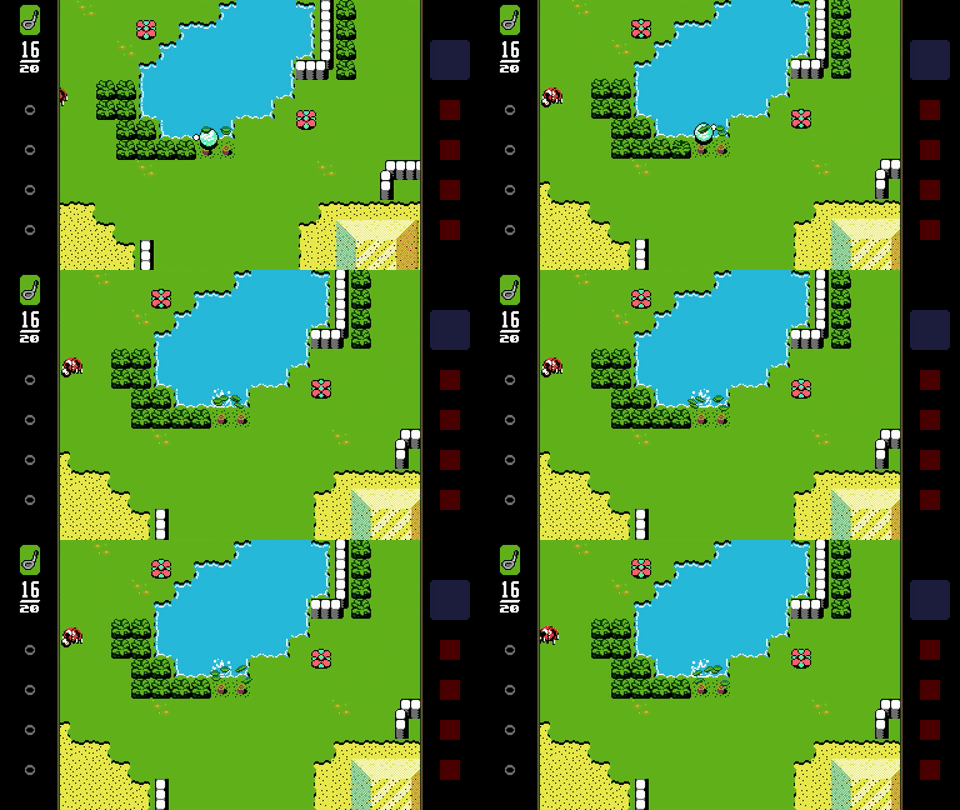
I do like metroidvanias, but my problem with them is, the exploration is often unsatisfying. The level design rarely has any forks, except fake ones, where one path is the TRUE one you want to take first (useful dead end), then the other is the critical path, and maybe another path is simply a dead-end until later in the game. It’s not really exploring, it’s kinda just annoying trial-and-error, as you try to read the mind of the designer. Worse yet, a lot of modern ones (metroid dread) lock the door behind you so that you can’t even backtrack and explore past areas, if you DO want to.
Golfaria is one that does exploration+action extremely right! As soon as you start up the game, it INSTANTLY feels so open, and huge! You can go in many branching directions from the starting village, and find good things to investigate and do. It’s so freeing, the game isn’t playing YOU, you’re playing IT! In fact, within 1 minute, you can find yourself pretty “lost”, not even remembering where the village was. But it’s not TOO open–you can’t go too far early on, due to the stroke limit.
I love that feeling of being lost, as long as I feel like I’m making SOME sort of progress–and thankfully in Golfaria, there is progress everywhere: NPCs with crucial hints, many secrets, collectibles, and most commonly: the stroke upgrades–which are VERY satisfying to get, because your max stroke count starts out SUPER small. Each one feels as impactful as an energy tank in Metroid games (even late in the game!), but they’re found as often as Metroid missle upgrades.
The upgrades are interchangeable in a cool way: usually in a metroidvania, a door is blocked until you have exactly the right upgrade, and that’s what makes such a game ultimately linear. But in Golfaria there are different combinations of upgrades that’ll get you past that door, and that multiplies the paths you can take through the game! Softly requiring some stroke count upgrades, is the main cool way it does this (Mortol II’s interchangable keys technique, is a cool way too!) but you can often work around problems when you’re missing a main upgrade too.
It’s got that great “expeditions” gameplay loop from Porgy, Grimstone, and Pilot Quest, but Golfaria is the only one that makes you feel truly overpowered at the very end–you barely have to worry about your strokes at all towards the end, and it feels awesome.
I freaking love how Golfaria looks, it’s super uniquely retro. I suspect it’s divisive–I too, was unsure how to grok the landscape for the first few minutes. But I at least was instantly “bought in” that someone might have designed this crazy 3d look back in the 80s. But the more I played it, the more I loved it, I just like looking at the neato geometry of it. It’s not so different from Sonic 3D Blast or Rollercoaster Tycoon really, and I love those!
Like I’ve said in other reviews, it’s hard to make action games that aren’t about combat, but they did a great job here. There IS legitimate gameplay here, dodging obstacles and enemies, judging distances, using abilities at the right time. Always engaging, and allowing self-expression in how I get past problems. And OMG have I mentioned that ricochets are one of the best things in video games? Lotsa that here!
The final encounter’s gameplay isn’t amazing, but something happens during it that calls back to something earlier, and that really elevates the encounter in a very cool way. So that makes the boss cool.
Golfaria is one of my favorite games ever–Before I even got 50 golds in UFO 50, I had ALREADY gone back and 100%ed Golfaria for a 2nd time, just for FUN. Who plays a game just “for fun”, not even to change the color of the cart, wtf??? I’m already itching to re-play it again. It’s definitely going to be a yearly thing for me, like some of my other all-time favorite games.
This is a very polarizing game in the pack–in a bad way. In fact, I think the majority of players hate it. It blows my mind ‘cuz I think it’s so good, and I don’t really understand why people wouldn’t like it! Someone else pointed out to me, that they must not be giving it a real chance–probably ran out of strokes once, got sent back to start, and said “meh not for me”. Just like what happens to many players of Outer Wilds–die once, say “meh, not for me” and quit, and miss out on one of my favorite experiences ever.
1 – Mini & Max
[My Description: Open world platforming adventure. Talk to NPCs, find upgrades, pick up or throw things, do mini quests, all while locked in a closet!]
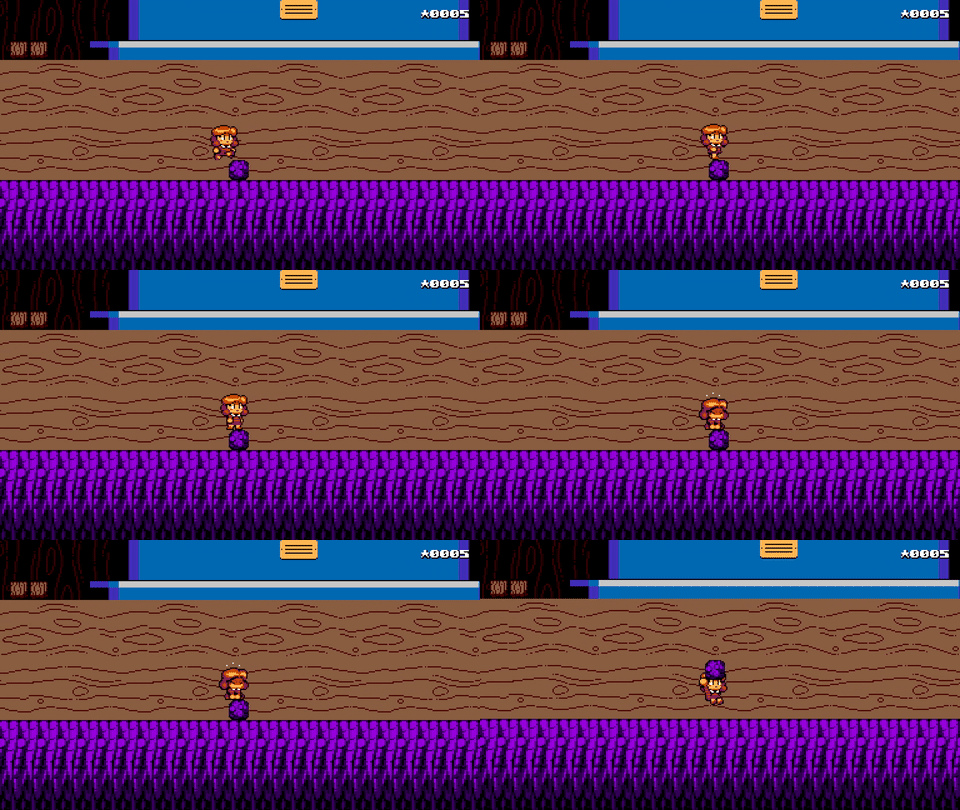
This write-up will be relatively short and vague, ‘cuz most of the enjoyment of Mini & Max comes from discovering the game for yourself. Luckily it’s pretty easy to explain why I fundamentally love it!
Throughout my life, whenever I go hiking (pretty often!), I wish I could stumble upon things to investigate and solve on the hike, and then find a prize as a reward. Then I get home and think “ooh I need to find a video game that let’s me capture that feeling.” For me, it’s the ultimate promise of video games, the holy grail I’m always looking for.
Inevitably I’d re-try something like Elder Scrolls or Zelda, but they’d put up too many frustrating guard rails: In Skyrim, I’d discover a cave, but I can’t complete it because I don’t have the right quest. In Wind Waker, I can’t sail wherever I want, because there are invisible walls of NPCs telling me “no its too windy there”. And what do you even get if you explore? Just rupees, who cares.
Mini & Max is one of only two games ever, that I feel have TRULY fulfilled this dream of mine adequately–the dream of truly rewarding “self-directed exploration” gameplay.
The other game is Zelda: Breath of the Wild. However, Mini & Max does at least one thing BETTER: In BOTW, the prizes you stumble upon, are NOT QUITE unique and special enough–spirit orbs, disposable weapons, crafting resources, all satisfying stuff, yes, and much better than rupees! But kinda interchangable, not unique. But what if you could often find things as game-changing and unique as BOTW’s “Magnesis” power, but just out in some random cave? That’s the miracle that Mini & Max manages to provide: stuff I randomly found that was like “wow really? am I reading this tooltip right?”
And can we take a moment to appreciate the excellence of Super Mario Bros. 2’s mechanics of standing on stuff, picking it up, carrying it around, and throwing it? I wish all platformers copied off of the SMB2 style by default. I think it’s just strictly better than “jumping on enemies kills them”. Because this way there are so many more options for killing enemies, and so many more interactions to discover between game objects, so much more design space, for little cost.
Mini & Max makes a slight adventuring improvement on that mechanic by letting you have a SMALL inventory, just enough to help you do quests more reasonably, or some other cool tricks, but not so much that you’re doing “inventory management” hoarding, a very overused video game mechanic IMO.
I pretty much can’t think of anything in the game I’d want changed or improved. The exposition is cute (love the connection to Party House!), the graphics are nicely retro, the length is just right, the ending sequence is awesome. And being tiny in a big house is one of my favorite game settings, developers should use that more!
Disclaimer
A big part of the UFO 50 is discovering the games for yourself, and which ones resonate most with you.
So, if you just scrolled straight to the end of the article, saw the top 5 best games in the package, and decided to choose those as the first ones you load up in UFO 50, I’m not confident you’ll be very impressed. There’s no discovery in that!
Plus, you’re gonna fold your arms, and go in with very high expectations for those games, saying “hmm and you’re telling me this is one of the best games ever? Pssh. Pff.” No game’s really gonna stand up to that kind of hype. Nothing stands up to that kind of “pshfft”.
I recommend instead playing the games pretty randomly!
UFO 50 has a lotta very different games, and nobody is supposed to love all of them!
I wrote pretty much the same disclaimer in my Top 62 Things to Stumble Across in Breath of the Wild article–if you just go straight to those moments in Zelda: Breath of the Wild, you’re not gonna be impressed. You have to stumble upon them yourself through normal gameplay, to appreciate them!
That Was Part 3 of 3
Part 1 is here. It has my introduction, and my F Tier, D Tier, C Tier.
Part 2 is here. It has my B Tier and A Tier.
You’re looking at part 3! It has my S Tier and my SSS Tier.
This is the end!

 Epyo's Articles About Fun Stuff